
Attack Path Prioritization
Cloud Risk Intelligence Platform
Cloudryption connects cloud assets, identities, data exposure, workloads, and attack paths into one evidence graph — so security teams can understand what is reachable, what matters, and which fixes reduce the most real risk.
Powered by CID, the Cloud Intelligence Decisions engine that turns cloud evidence into prioritized remediation decisions.
See across identities, workloads, data, apps, and infrastructure.
Focus on the attack paths, exposures, and risks that matter most.
Turn complex findings into clear remediation and policy action.
Scalable, extensible, and designed for security teams from pilot to enterprise scale.
How CID Works
CID correlates configuration, identity, network, workload, and data signals into a decision graph. The result is not another alert queue — it is a model that explains what is exposed, why it matters, and which remediation actions produce measurable risk reduction.
Read-only discovery of cloud configuration, identities, network topology, workloads, and security findings across your environment.
Standardize cloud signals, security findings, and asset metadata into a common evidence format, regardless of cloud provider.
Build a decision graph that shows how cloud assets relate — which identities can access which resources, how exposure flows through the environment, and where sensitive data is reachable.
Highlight the assets that matter most to your business and show which attack paths lead to them.
Recommend the smallest set of remediation actions that reduce the most connected risk — not by finding count, but by measurable exposure reduction.
Generate board-ready risk narratives and detailed technical findings, both backed by the same evidence graph.
Early customer outcomes and verified pilot signals
Features in Action
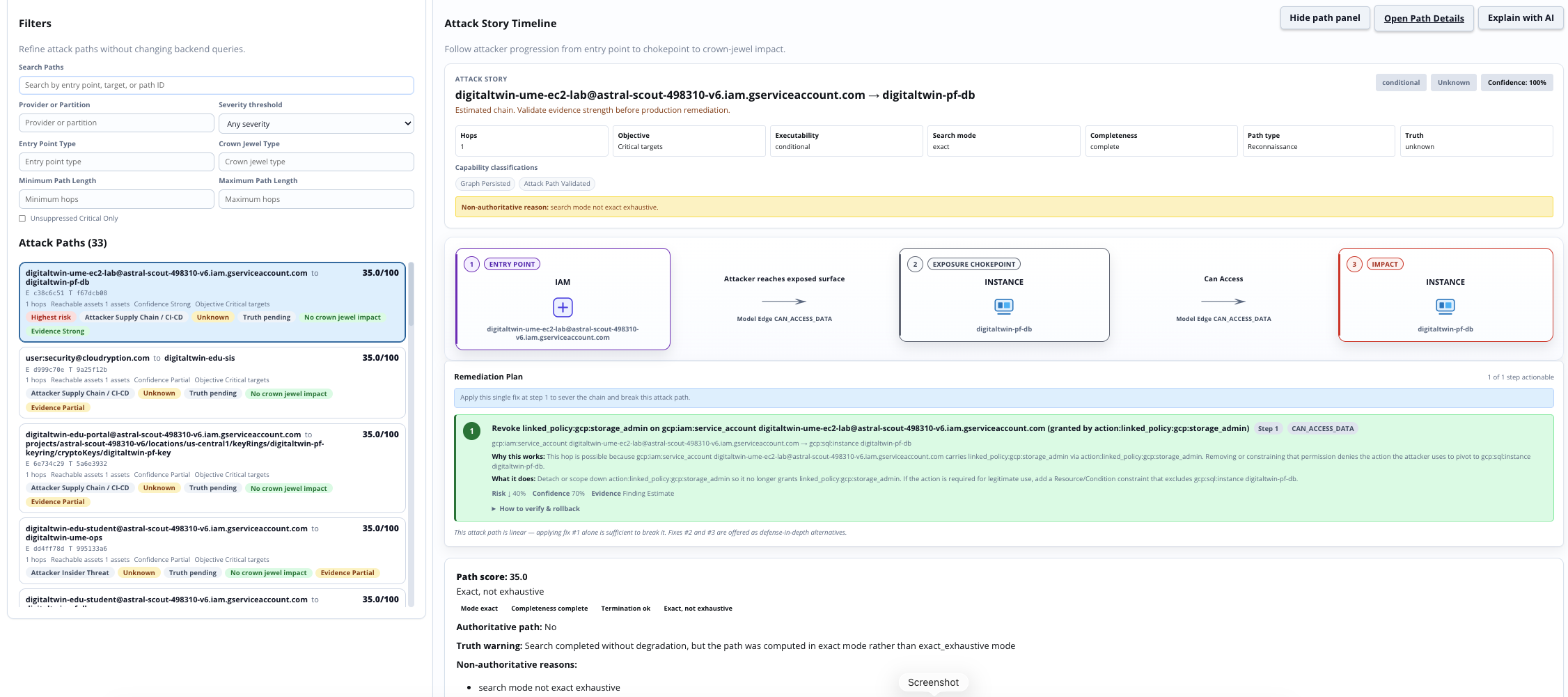
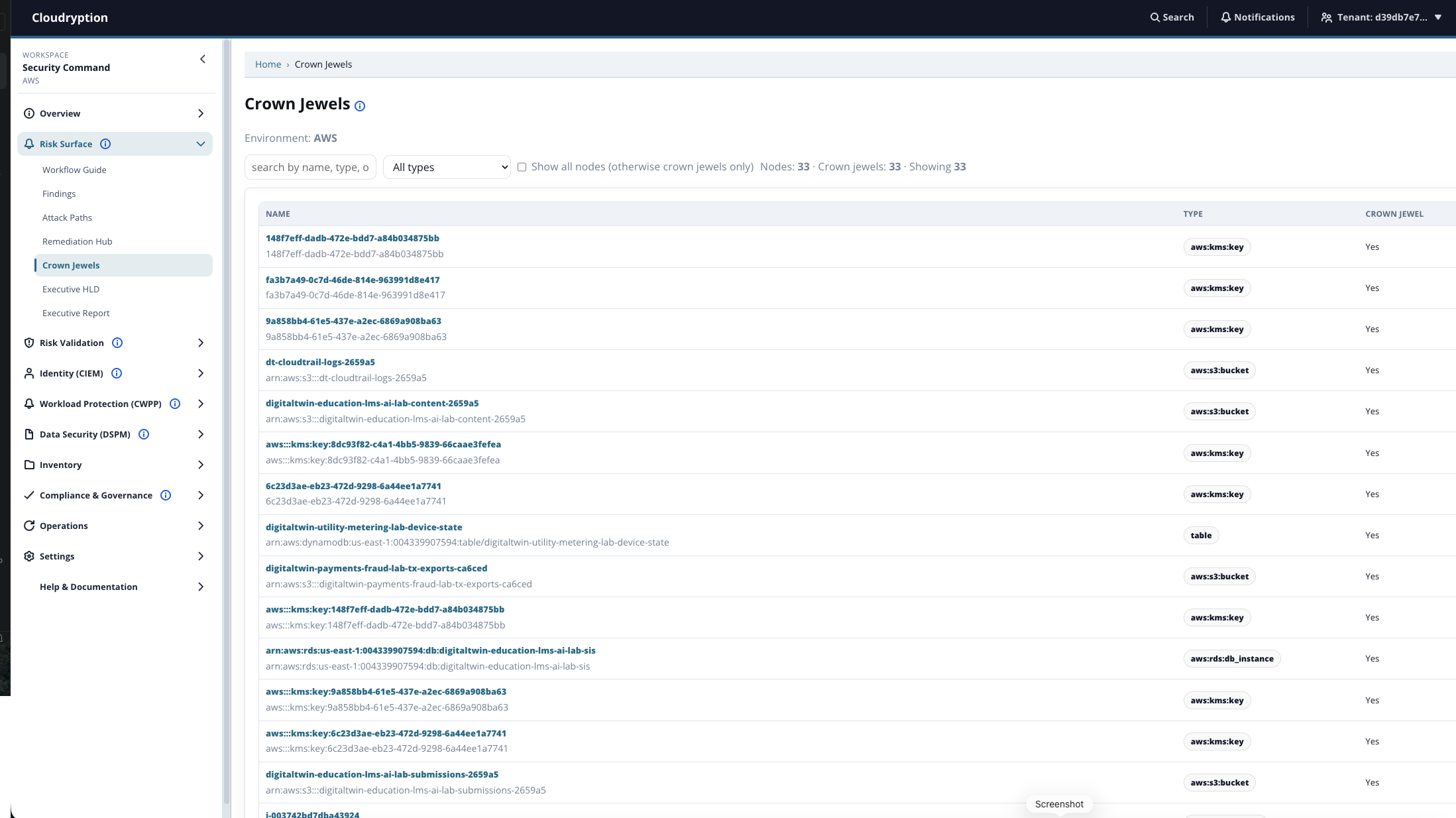
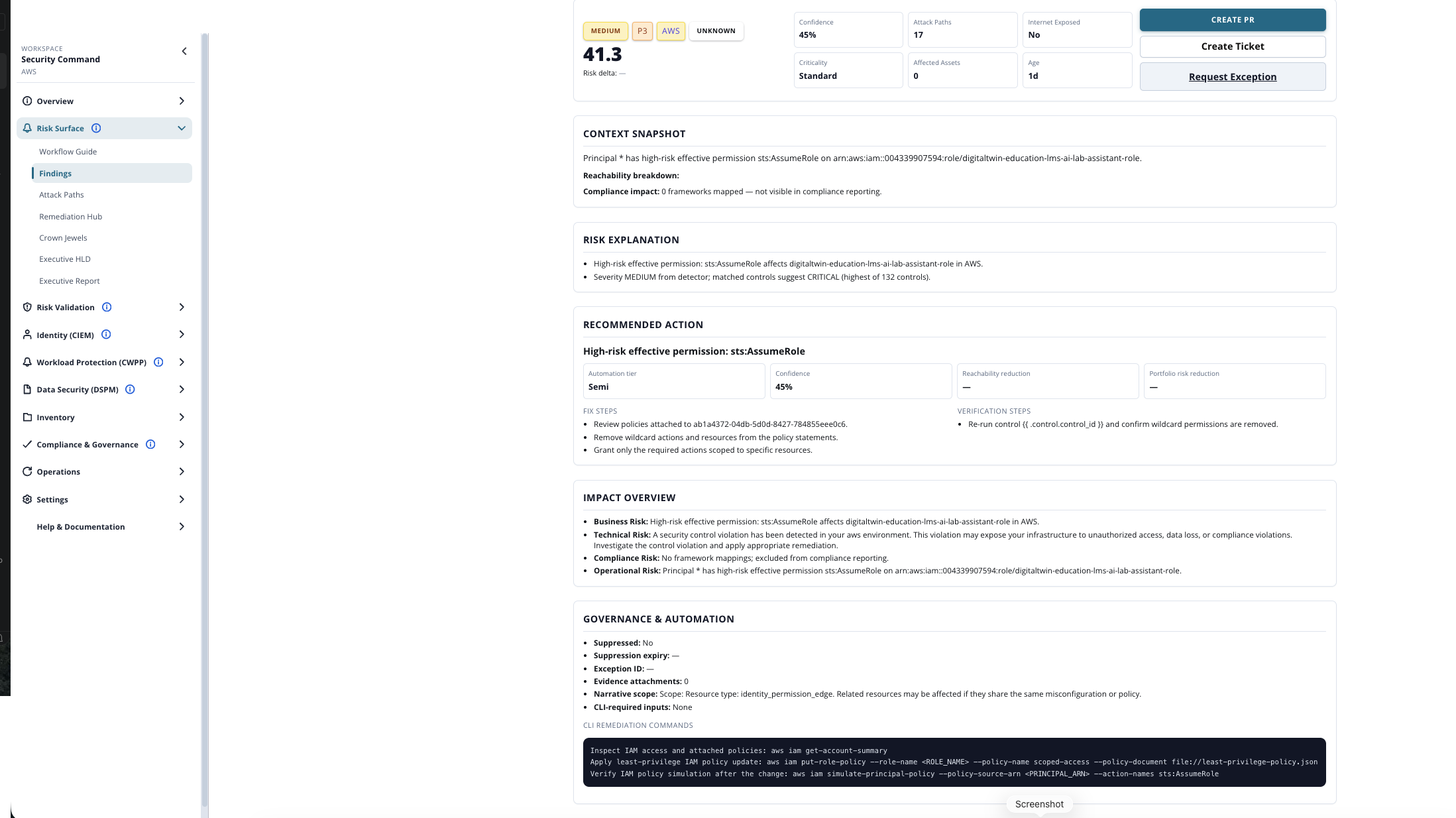
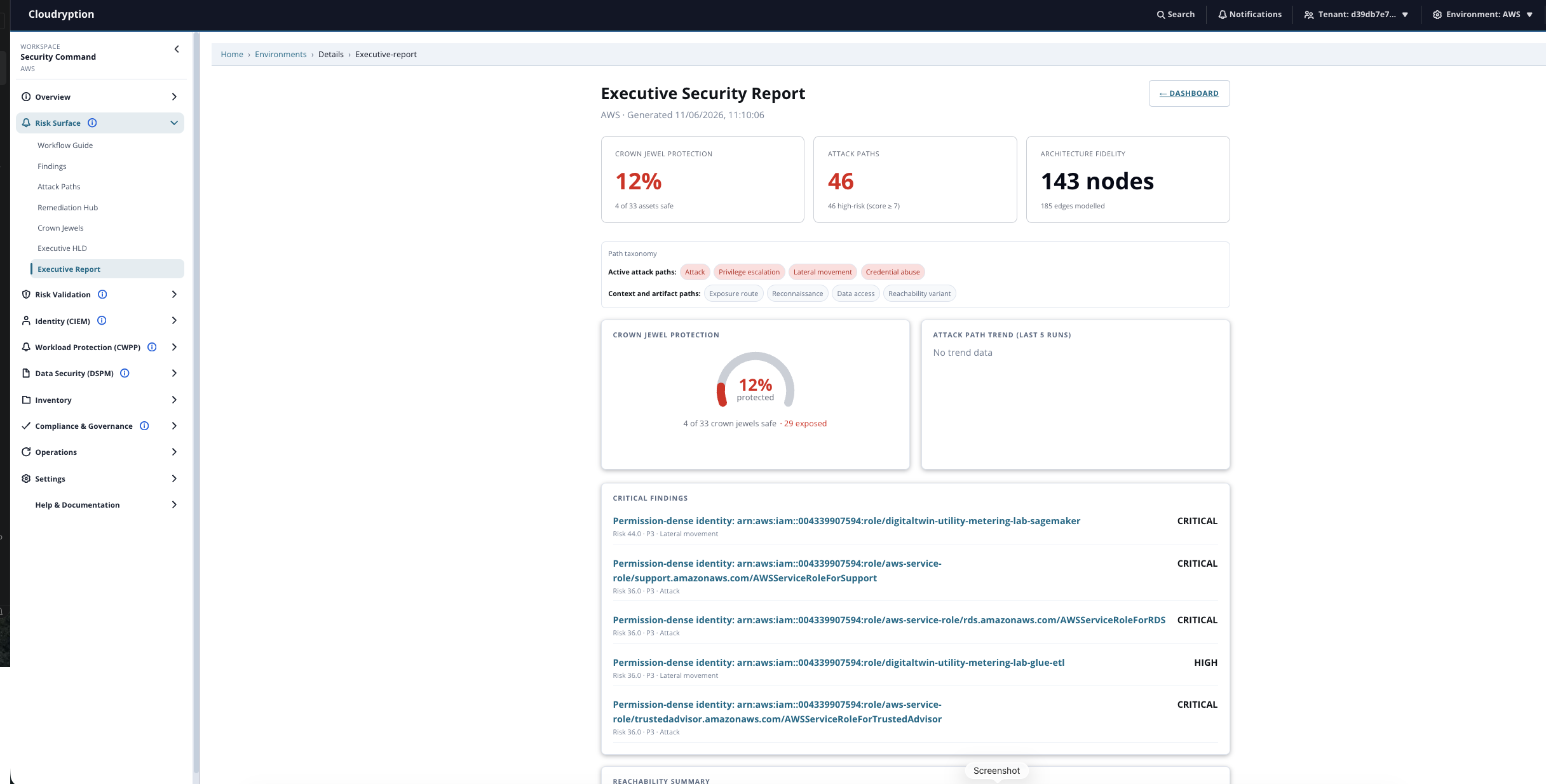
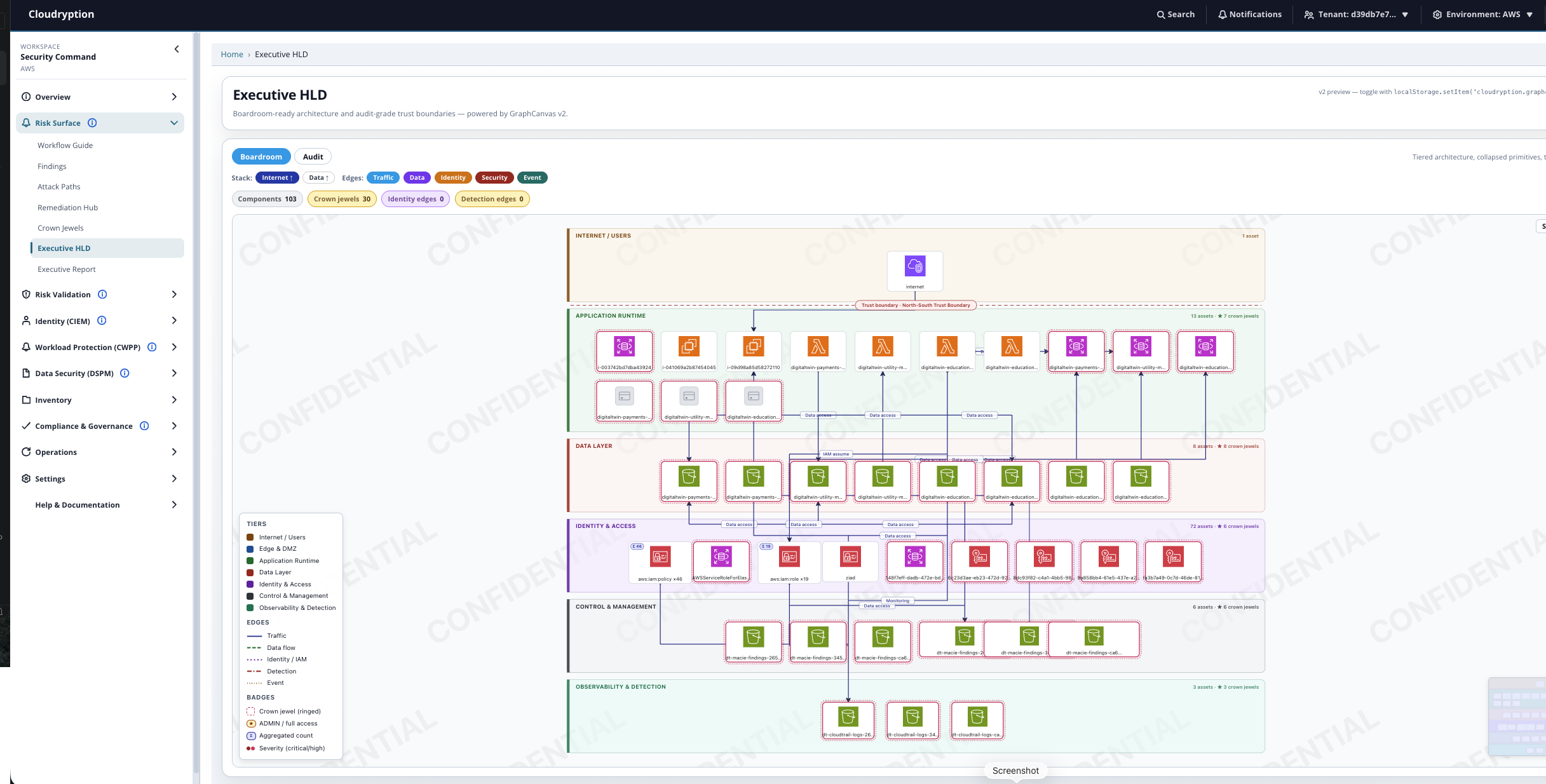
Live product captures from Cloudryption dashboard flows (attack paths, crown jewels, remediation planning, executive reporting, and architecture view).
Why Teams Choose Cloudryption
Security teams across startups, scale-ups, and enterprises face posture findings, identity exposure, workload vulnerabilities, and sensitive data risks across separate tools. Cloudryption connects these signals into one explainable attack-path model so teams can understand what matters first.
Evidence is spread across CSPM, CIEM, DSPM, CWPP, SIEM, and vulnerability tools — with no unified view of combined risk.
One misconfiguration can chain through identities, workloads, and data. Most teams cannot see how far a weakness can reach.
Without knowing which fixes reduce the most risk, teams delay action or waste cycles on findings that do not matter.
Decision layer for cloud findings, identity risk, data exposure, attack paths, and executive reporting
Cloud configuration and posture evidence across AWS, Azure, and GCP.
Identity permissions, trust relationships, and privilege escalation paths.
Sensitive data location, classification, and access exposure context.
Workload exposure, runtime behaviour, and vulnerability signals.
Confirms whether a technical weakness can translate into real business impact.
Models attacker movement across cloud assets, controls, and identities.
Recommends minimum fix sets that deliver maximum measurable risk reduction.
Translates technical cloud risk findings into board-level decision language.
Example Use Cases
The scenarios and metrics below are illustrative examples that show Cloudryption workflows.
A public-facing workload can reach a storage bucket containing customer records through excessive workload identity permissions.
Business outcome: Customer data exposure path removed before production impact.
A developer identity can assume a privileged production role because of weak trust policy conditions.
Business outcome: Production privilege escalation chain contained.
A vulnerable workload can reach internal services and uses an identity with broad read access to sensitive databases.
Business outcome: Critical workload compromise no longer leads to sensitive data access.
Interactive Platform Demo
Cloudryption correlates exposure, IAM trust, workload context, and data access to surface attacker-relevant routes that bypass isolated control views.
Crown jewels are continuously tracked so remediation effort is directed at what matters — not alert volume.
Remove direct internet-to-workload reachability.
Tighten role assumption conditions to required use cases only.
Scope storage access to least-privilege service accounts.
Platform Differentiators
About Cloudryption
Cloudryption is a cloud security platform built to help organizations move from alert-driven operations to decision-driven cloud risk reduction. The platform connects cloud infrastructure, identity, workload, and data exposure signals into an explainable attack-path model, helping teams understand what matters, why it matters, and which remediation actions deliver the highest risk reduction.
Built by a focused cloud security engineering team, Cloudryption is intentionally transparent about what is available today, what is in progress, and which outcomes customers can validate during pilot and production deployment.
Get in Touch
Request a technical walkthrough, pilot discussion, or anything else.
Thanks for reaching out. We\'ll get back to you shortly.